
Introduction
Choosing the right hosting for your website can feel confusing at first. When you start researching, you quickly come across terms like shared hosting, dedicated servers, and cloud hosting. These phrases can sound technical and intimidating, especially if you’re new to building websites.
The reality is much simpler. Each type of hosting is just a different way of storing and delivering your website to visitors. Once you understand how each one works, the differences become clear, and the decision becomes much easier. This guide explains everything in plain language so you can confidently choose what works best for you.
What Is Web Hosting?
Before diving into the different types, it’s important to understand what web hosting actually is. Every website consists of files such as text, images, and code. These files need to be stored somewhere so that people can access them online.
Web hosting is the service that stores your website on a server, which is a powerful computer connected to the internet. When someone visits your website, their browser connects to that server and loads your content.
The type of hosting you choose determines how those servers are set up, how resources are shared, and how your website performs.
Shared Hosting Explained
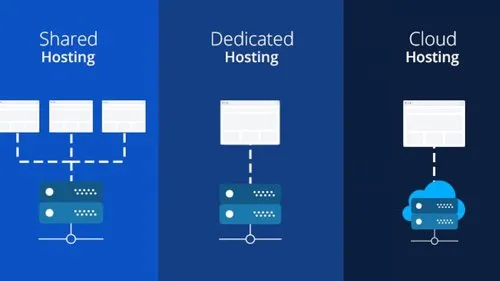
Shared hosting is the most common starting point for beginners. In this setup, your website shares a single server with many other websites. All of these sites use the same pool of resources, including memory, processing power, and storage.
A simple way to understand shared hosting is to imagine living in an apartment building. You have your own space, but you share the building’s infrastructure with other residents. Most of the time, everything works smoothly. However, if one resident uses a lot of resources, it can affect everyone else.
This is exactly how shared hosting behaves. If another website on your server experiences heavy traffic, your site might slow down temporarily.
Despite this limitation, shared hosting is popular because it is affordable and easy to use. Hosting providers handle most of the technical tasks, making it ideal for beginners who want a simple setup without worrying about server management.
Advantages of Shared Hosting
Shared hosting stands out for its accessibility. It is usually the cheapest option available, making it perfect for those who are just starting out or working with a limited budget. The setup process is typically quick, and many providers offer user-friendly dashboards that simplify managing your website.
Another advantage is that you do not need technical expertise. The hosting provider takes care of maintenance, updates, and basic security, allowing you to focus on creating content or building your business.
Limitations of Shared Hosting
The biggest drawback of shared hosting is performance. Because resources are shared among many users, your website’s speed can be affected by others on the same server. This can become noticeable as your traffic grows.
There is also limited control over the server environment. You cannot customize settings freely, which may be restrictive if your website has specific technical requirements. While security is generally managed well by hosting providers, the shared environment does introduce some level of risk compared to more isolated solutions.
Dedicated Servers Explained
Dedicated hosting offers a completely different experience. Instead of sharing a server, you have an entire physical server dedicated solely to your website or application. All resources are yours, and you do not have to compete with other users.
A helpful analogy is owning a house. You have full control over everything, from how the space is used to how it is maintained. There are no neighbors sharing your resources, which gives you more freedom and stability.
This type of hosting is designed for websites that need high performance, strong security, and complete control over their environment.
Advantages of Dedicated Servers
One of the main benefits of dedicated hosting is performance. Since all server resources are reserved for your website, it can handle high levels of traffic without slowing down. This makes it ideal for large or busy websites.
Another key advantage is control. You can configure the server exactly the way you want, install custom software, and optimize it for your specific needs. This level of flexibility is especially valuable for complex applications.
Security is also stronger because your server is not shared with others. This reduces the risk of issues caused by neighboring websites.
Limitations of Dedicated Servers
The most obvious drawback of dedicated hosting is cost. It is significantly more expensive than shared hosting, which can make it impractical for small projects or beginners.
It also requires technical knowledge. Managing a server involves handling updates, monitoring performance, and ensuring security. While managed services are available, they add to the overall cost.
For many websites, a dedicated server provides more power than necessary, leading to wasted resources and higher expenses.
Cloud Hosting Explained
Cloud hosting takes a more flexible approach by using a network of servers instead of a single machine. Your website can access resources from multiple servers, which work together as a system.
A useful comparison is a utility grid. Instead of relying on one source, you draw power from a network that adjusts based on demand. If one part of the system fails, others continue to supply what you need.
This structure makes cloud hosting highly adaptable and reliable, especially for websites with changing traffic patterns.
Advantages of Cloud Hosting
One of the biggest strengths of cloud hosting is scalability. You can easily increase or decrease resources depending on your needs. This is especially helpful if your website experiences sudden traffic spikes.
Reliability is another major benefit. Because your site is not tied to a single server, failures are less likely to cause downtime. The system can shift workloads to other servers when needed.
Cloud hosting also offers flexible pricing. Many providers charge based on usage, which can be cost-effective if managed carefully.
Limitations of Cloud Hosting
While cloud hosting offers flexibility, its pricing can sometimes be unpredictable. If your traffic increases significantly, your costs can rise as well.
It can also be slightly more complex than shared hosting. Although many platforms simplify the process, there is still a learning curve compared to more basic hosting options.
For very small websites, cloud hosting may not be the most economical choice.
Comparing the Three Options
When looking at shared hosting, dedicated servers, and cloud hosting side by side, the differences become clear. Shared hosting is the most affordable and beginner-friendly, but it comes with limitations in performance and control. Dedicated servers offer maximum performance and full control, but they require a higher budget and technical expertise. Cloud hosting sits between the two, providing strong performance, flexibility, and scalability.
Each option serves a different purpose, and none of them is universally better than the others. The right choice depends entirely on your needs.
How to Choose the Right Hosting
Selecting the right hosting comes down to understanding your current situation and future goals. If you are launching your first website and expect minimal traffic, shared hosting is usually the best place to start. It allows you to get online quickly without a large investment.
As your website grows, you may notice performance limitations. This is a natural point to consider upgrading to cloud hosting, which can handle increased demand and provide greater reliability.
If your website becomes large, complex, or mission-critical, a dedicated server may be the right choice. At that stage, the added performance and control can justify the higher cost.
Common Misconceptions
Many beginners assume that the most expensive hosting option is always the best. In reality, choosing hosting is about matching the service to your needs. Paying for a dedicated server when you do not need it is simply unnecessary.
Another misconception is that cloud hosting is too technical. While it can be more advanced, modern platforms have made it much more accessible than it used to be.
There is also a tendency to underestimate shared hosting. While it has limitations, it remains a practical and effective solution for many websites.
Final Thoughts
Understanding the differences between shared hosting, dedicated servers, and cloud hosting makes it much easier to make the right decision. Each option has its strengths and trade-offs, and the best choice depends on where you are in your journey.
Starting with a simple solution and upgrading over time is often the smartest approach. Hosting is not a permanent decision, and you can adjust as your website grows.
By focusing on your needs rather than the complexity of the technology, you can choose a hosting solution with confidence and spend more time building and improving your website.

With 23+ years in the Web Hosting Industry, Brian has had the opportunity to design websites for some of the largest companies in the industry. Brian currently holds the position as Co-Founder and Creative Director at WebHosting,coop Internet Cooperative