
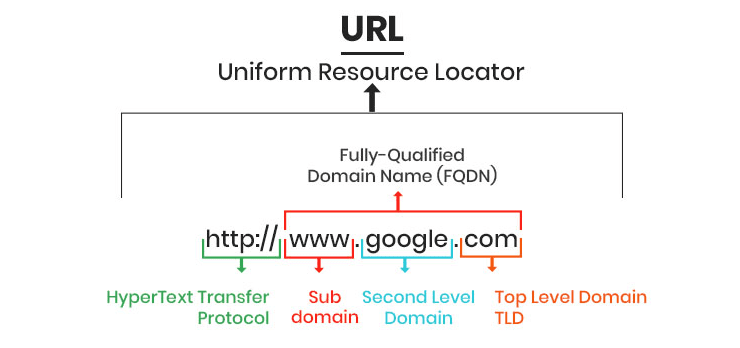
Domain names are one of the most important pieces of your online identity. While the “second-level domain” is your brand name (like example in example.com), the Top-Level Domain (TLD) is the extension at the end—such as .com, .org, or .ai.
Today, there are hundreds of TLDs available, and choosing the right one can impact branding, trust, SEO perception, and even marketing strategy. This post breaks down the major categories of TLDs and their advantages so you can understand what each one offers.
What is a TLD (Top-Level Domain)?
A Top-Level Domain (TLD) is the last segment of a domain name, appearing after the final dot.
For example:
- google.com → “.com” is the TLD
- wikipedia.org → “.org” is the TLD
- shop.tech → “.tech” is the TLD
TLDs are managed globally by ICANN (Internet Corporation for Assigned Names and Numbers), which oversees domain name systems worldwide.
1. Classic Generic TLDs (gTLDs)
These are the most common and traditional domain extensions.
.com
The most popular TLD in the world.
Advantages:
- Highest trust and recognition globally
- Best for businesses, startups, and general use
- Easy to remember
- Often the default assumption for users
Disadvantage:
- Most domain names are already taken
.org
Originally designed for organizations and nonprofits.
Advantages:
- Strong trust signal
- Associated with charities, open-source projects, and communities
- Seen as non-commercial and credible
Disadvantages:
- Not ideal for commercial brands
- Less SEO advantage for e-commerce
.net
Originally intended for network-based companies.
Advantages:
- Good alternative when .com is taken
- Still widely recognized
- Works well for tech or infrastructure companies
Disadvantages:
- Less brand authority than .com
- Often perceived as secondary choice
2. Country Code TLDs (ccTLDs)
These represent specific countries or territories.
Examples:
- .us (United States)
- .uk (United Kingdom)
- .ca (Canada)
- .de (Germany)
- .jp (Japan)
Advantages:
- Strong local SEO ranking in that country
- Builds trust with regional customers
- Often preferred by governments or local businesses
- Can improve conversion rates in local markets
Disadvantages:
- May limit global perception
- Some have registration restrictions
3. New Generic TLDs (Modern Extensions)
Over the last decade, hundreds of new TLDs have been introduced. These are often called “new gTLDs.”
Popular examples:
- .tech
- .app
- .online
- .store
- .site
- .blog
- .ai
- .io
- .co
- .xyz
.tech
Advantages:
- Great for startups and software companies
- Modern, innovative branding
- Strong appeal in developer communities
.app
Advantages:
- Owned and secured by Google
- Requires HTTPS (built-in security)
- Perfect for mobile apps and SaaS products
.store
Advantages:
- Ideal for e-commerce brands
- Clear commercial intent
- Improves customer understanding instantly
.blog
Advantages:
- Perfect for content creators and writers
- Helps define purpose immediately
- Strong branding for personal sites
.ai
Originally a country code for Anguilla, now widely used for artificial intelligence companies.
Advantages:
- Huge popularity in tech and AI startups
- High perceived value in 2020s tech industry
- Strong branding signal for innovation
Disadvantages:
- Expensive compared to other TLDs
.io
Originally British Indian Ocean Territory, now widely used in tech.
Advantages:
- Popular among developers and startups
- Short and memorable
- Strong “tech identity” association
Disadvantages:
- Higher pricing
- Geographic controversy for some users
.co
Originally Colombia’s country code, now used globally.
Advantages:
- Short and brandable alternative to .com
- Startup-friendly
- Easy to market
Disadvantages:
- Still often confused with .com
.xyz
A flexible, generic modern extension.
Advantages:
- Very affordable
- Wide availability of names
- Used by innovative startups and Web3 projects
Disadvantages:
- Lower trust compared to .com or .org
- Less mainstream recognition
4. Industry-Specific TLDs
These are designed for specific industries or use cases.
Examples:
- .edu (education institutions)
- .gov (government agencies)
- .bank (financial institutions)
- .law (legal professionals)
- .health (health-related organizations)
- .travel (travel agencies)
Advantages:
- Extremely high trust and authority
- Instant industry identification
- Often restricted, improving credibility
Disadvantages:
- Strict eligibility requirements
- Limited availability
5. Geo and City-Based TLDs
Some regions and cities have their own TLDs.
Examples:
- .nyc (New York City)
- .london
- .berlin
- .paris
Advantages:
- Strong local branding
- Great for tourism and local businesses
- Helps improve regional identity
Disadvantages:
- Limited audience scope
- Not suitable for global brands
6. Creative and Branding TLDs
These are newer, often used for marketing or creative branding.
Examples:
- .design
- .studio
- .media
- .cloud
- .digital
- .space
Advantages:
- Highly memorable and unique
- Great for branding and differentiation
- Helps communicate purpose instantly
Disadvantages:
- May not have universal trust yet
- Some users still expect .com
How to Choose the Right TLD
Choosing the right domain extension depends on your goals:
Choose .com if:
- You want maximum trust and global recognition
- You are building a long-term brand
Choose ccTLD if:
- You are targeting a specific country or region
Choose new gTLDs if:
- You want branding flexibility
- You want a short, memorable domain
- You are a startup or tech company
Choose industry-specific TLDs if:
- You meet eligibility requirements
- You want authority in a regulated space
Advantages of Using Modern TLDs
The expansion of domain extensions has created major benefits:
- More available domain names
- Better branding opportunities
- Industry-specific identity signals
- Increased creativity in naming
- Easier startup branding without expensive premium .com domains
Final Thoughts
The world of TLDs has evolved far beyond just .com. Today, businesses, creators, and organizations have hundreds of options that allow them to build more meaningful, descriptive, and brand-aligned identities online.
While .com remains the gold standard, modern extensions like .ai, .tech, and .store are reshaping how companies present themselves on the internet.
Choosing the right TLD is no longer just a technical decision—it’s a branding strategy.

With 23+ years in the Web Hosting Industry, Brian has had the opportunity to design websites for some of the largest companies in the industry. Brian currently holds the position as Co-Founder and Creative Director at WebHosting,coop Internet Cooperative