
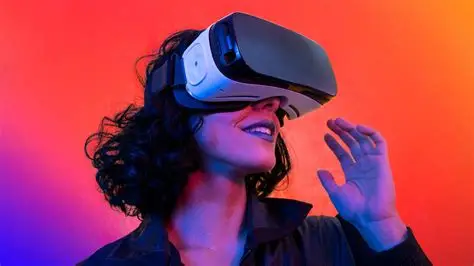
Welcome to the Next Dimension of the Internet
For decades, the internet has transformed the way people communicate, shop, learn, work, and entertain themselves. What began as a collection of simple text-based websites has evolved into an interconnected digital world filled with videos, interactive applications, social networks, online marketplaces, and artificial intelligence. Yet, despite these remarkable advancements, most people still experience the internet through a relatively flat, two-dimensional screen.
We open a browser, type a website address, click links, scroll through pages, and interact with digital content using a mouse, keyboard, or touchscreen. Although this experience has become increasingly sophisticated, it remains fundamentally different from the way we interact with the physical world.
What if the next evolution of the internet allowed us to step inside it?
Imagine putting on a virtual reality (VR) headset and simply saying, “Take me to my favorite clothing store.” Within seconds, you are transported into a realistic digital shopping environment. You can walk through the entrance, browse clothing racks, pick up products, inspect them from different angles, and place them into a virtual shopping cart. When you are ready to purchase, you walk to the cashier, complete your transaction, and have your products delivered to your home.
Need assistance? Instead of searching through frequently asked questions or waiting for an email response, you can walk to a customer service desk and speak with a virtual representative who helps you resolve your problem.
This is the future of a three-dimensional internet, where websites become immersive environments that people can explore rather than flat pages they simply view. By combining virtual reality, artificial intelligence, spatial computing, and existing internet technologies, businesses could transform their websites into interactive digital destinations.
The internet of tomorrow may not simply be something we look at. It may become a world we enter.
1. Moving Beyond the Two-Dimensional Web
The traditional internet was designed around documents, hyperlinks, and graphical interfaces. Websites organize information into pages, menus, images, buttons, and other elements that users navigate through a screen. This structure has served billions of people well, but it also imposes limitations on how digital experiences are designed.
Consider the difference between shopping online and visiting a physical store. On a conventional website, customers browse product images, read descriptions, compare prices, and click buttons to make purchases. Although online shopping is convenient, customers cannot naturally walk through the store, examine products as they would in person, or interact with the surrounding environment.
A three-dimensional internet could combine the convenience of online shopping with some of the experiences associated with visiting a physical location.
Instead of opening a website and navigating its menus, customers could enter a virtual environment designed to resemble a real store, showroom, office, museum, or entertainment venue. They could move through the space, interact with objects, and discover information in a more natural way.
Websites could become digital destinations with their own architecture, atmosphere, and interactive features.
A fashion retailer might create a virtual shopping mall. A technology company could build an interactive showroom where customers examine computers and smartphones. A university could offer a virtual campus where prospective students attend presentations and explore classrooms. A music platform could create virtual venues where fans discover new artists and attend live performances.
The possibilities extend far beyond entertainment. A three-dimensional internet could change how businesses present their products, how educators deliver lessons, and how people communicate with one another.
The transition will not happen overnight, and traditional websites will remain important. However, as VR hardware becomes more accessible and immersive interfaces improve, three-dimensional experiences could become an increasingly significant part of how people use the internet.
2. Visiting Websites Through Voice Commands
One of the most exciting possibilities for the future of the internet is the ability to navigate digital environments through natural conversation.
Today, users generally type a website address into a browser or search for a business using a search engine. They then navigate through the website to find what they need. In a VR environment, artificial intelligence could make this process more direct.
Imagine putting on a headset and saying, “Take me to an online electronics store where I can compare the newest laptops.”
An AI assistant could interpret your request, identify relevant retailers, and offer a selection of virtual destinations. After you choose one, the system could transport you into the retailer’s digital environment.
You might appear at the entrance of a virtual electronics store, where laptops are arranged across display tables. You could walk toward a particular model, pick it up virtually, rotate it, examine its keyboard, and ask questions about its specifications.
You could say, “Show me laptops with at least 16 gigabytes of memory under $1,000,” and the environment could highlight matching products.
This approach would combine voice recognition, conversational AI, search technology, and interactive three-dimensional design into a single experience.
Rather than learning how every website is organized, users could explain what they want to accomplish. AI could help them find the appropriate destination, navigate the environment, and locate relevant products or services.
The technology could also make the internet more accessible to people who find traditional interfaces difficult to use. Voice commands, spatial navigation, adjustable interfaces, and assistive features could offer alternative ways to interact with digital information.
However, users should remain in control of where they are taken, which information they share, and whether an AI assistant can make purchases on their behalf. Convenience must not come at the expense of privacy or user choice.
3. The Virtual Store: Shopping in a Three-Dimensional World
Online shopping is one of the strongest candidates for early adoption of immersive internet experiences because retail already depends on presenting products, answering questions, and helping customers make purchasing decisions.
Imagine entering a virtual department store that feels similar to a real shopping center. You walk through its entrance and see different departments, including clothing, electronics, furniture, beauty products, and home accessories.
Instead of scrolling through endless product listings, you explore aisles that organize products into familiar categories.
If you want to purchase a new jacket, you walk into the clothing section. Jackets hang on virtual racks, allowing you to browse different colors, sizes, and styles. You select a product and examine its materials, stitching, and design. You could even view a virtual representation of how it might look when worn.
AI-powered assistants could recommend complementary products, compare prices, explain materials, and help identify the correct size based on information you voluntarily provide.
Furniture retailers could provide an even more compelling experience. Customers could walk through a virtual furniture showroom, sit on digital sofas, examine tables, and visualize how different pieces might look together.
A customer purchasing a television could inspect its dimensions and features, compare it with competing models, and view it within a simulated living room.
These experiences could help customers make more informed decisions before spending money.
Of course, virtual product representations would need to be accurate. A digital jacket cannot fully reproduce the physical sensation of its fabric, and a virtual sofa cannot perfectly communicate how comfortable it feels. Retailers would still need to provide reliable descriptions, specifications, return policies, and other information.
Nevertheless, three-dimensional shopping could make online retail more engaging and intuitive while helping customers understand products in greater detail.
4. Virtual Cashiers and a New Checkout Experience
In a physical store, customers typically finish shopping by bringing their purchases to a checkout counter. A three-dimensional internet could recreate this familiar process within a virtual environment.
After browsing a digital store, customers could place selected products into a virtual basket and walk toward a cashier’s desk. The checkout interface would display their purchases, quantities, prices, shipping options, taxes, and final total.
Customers could then complete payment using an approved payment method.
Although the cashier and checkout counter would be digital, the underlying transaction would connect to the retailer’s real inventory, payment processing system, and order-management infrastructure.
For example, a customer might select three products in a virtual store. When they reach the checkout desk, the system retrieves the actual prices and confirms availability. The customer reviews the order, selects a delivery address, and authorizes payment.
The retailer then processes the order and ships the physical products to the customer’s home.
This distinction is important: the virtual store would provide the immersive shopping experience, while existing e-commerce infrastructure would handle the real transaction.
Businesses could also introduce different checkout options. Customers who enjoy immersive shopping might complete purchases at a virtual cashier, while those who prefer speed could use a conventional checkout panel.
The goal should not be to make every purchase more complicated. Instead, three-dimensional interfaces should provide additional value while preserving simple alternatives for customers who want to buy something quickly.
Security would be essential. Payment details should be protected, purchase confirmations should be clear, and users should explicitly authorize transactions. Systems should also prevent accidental purchases caused by misunderstood voice commands or unintended gestures.
With thoughtful design, virtual checkout could make shopping feel more natural without sacrificing the reliability of traditional online payments.
5. Customer Service Desks in the Virtual Internet
One of the biggest frustrations associated with online shopping is obtaining customer support. Customers frequently search through help articles, navigate automated phone systems, submit support tickets, or wait for email responses.
A three-dimensional internet could make customer service more interactive by recreating the experience of visiting a help desk.
Imagine walking through a virtual store and approaching a customer service counter. Behind the desk is an AI-powered representative capable of answering questions about products, orders, shipping, returns, warranties, and account settings.
You could ask, “Where is my order?” or “Can I exchange this jacket for a different size?”
The representative could retrieve authorized order information, explain the available options, and guide you through the next steps.
If the issue requires human assistance, the system could connect you with a real customer service employee through voice, video, or an avatar representing the employee in the virtual environment.
This would combine the convenience of automated support with the expertise and judgment of human representatives.
Businesses could create specialized departments within their virtual locations. A customer might visit the returns desk to process an exchange, speak with a product specialist about technical specifications, or approach a billing department to resolve a payment problem.
The environment could also provide visual assistance. A technical support representative might demonstrate how to configure a device by showing the customer a three-dimensional model, highlighting specific components, and explaining each step.
However, AI representatives must not pretend to be human employees. Customers should know whether they are speaking with an AI system or a real person, particularly when discussing sensitive account information or complex problems.
A well-designed virtual customer service system would offer faster assistance, clear escalation options, and a more personal experience than many conventional support interfaces.
6. Artificial Intelligence Will Help Build the Three-Dimensional Web
Creating a realistic virtual store or interactive website can require substantial design, development, and technical resources. Businesses need three-dimensional models, interactive objects, navigation systems, product databases, and interfaces that work across different devices.
Artificial intelligence could help reduce these barriers.
In the future, a business owner might describe a desired virtual environment in ordinary language: “Create a modern clothing store with separate sections for men’s and women’s fashion, a customer service desk, product displays, and a checkout counter.”
AI tools could assist with generating the initial layout, creating digital assets, organizing product information, and developing interactive features.
A retailer might upload existing product photographs, descriptions, inventory data, and branding materials. AI systems could help transform these assets into a navigable three-dimensional showroom.
Developers would still need to review the results, integrate payment systems, verify security, and ensure that the environment works correctly. Nevertheless, AI-assisted creation could make immersive websites more affordable for small businesses that cannot afford large development teams.
Artificial intelligence could also personalize environments. A customer interested in electronics might see a different set of recommendations than someone shopping for clothing. A returning visitor could choose to resume a previous shopping session or revisit products they saved.
Personalization should remain transparent and optional. Businesses must respect user privacy and avoid collecting unnecessary behavioral information simply because a virtual environment makes tracking easier.
AI could ultimately become the bridge between ordinary websites and interactive digital spaces, allowing businesses to build sophisticated experiences without requiring every company to develop its own technology from scratch.
7. Virtual Reality Could Transform Entertainment and Social Interaction
Shopping is only one part of the opportunity. A three-dimensional internet could also change how people discover entertainment, communicate with friends, and participate in online communities.
Music platforms could create virtual concert venues where fans attend performances, explore artist merchandise, and interact with other audience members. Movie studios could build immersive promotional environments where visitors explore fictional worlds, watch trailers, and learn about upcoming releases.
Social networks could evolve into customizable virtual spaces where people meet, share content, and participate in group activities. Instead of communicating exclusively through profile pages and message feeds, users could gather in digital lounges, attend events, or explore shared environments.
Imagine meeting friends in a virtual city, visiting a digital art gallery, and then attending a live music performance without leaving home.
Educational institutions could also use immersive environments to make complex subjects easier to understand. Students could explore historical landmarks, examine scientific models, or participate in simulated experiments.
Businesses could create virtual offices where employees meet in shared workspaces, examine three-dimensional presentations, and collaborate on projects.
These experiences could make online interactions feel more spatial and engaging. However, they would not replace every benefit of in-person interaction. Some people will prefer conventional video calls, messaging, or face-to-face meetings.
The most successful platforms will likely offer multiple ways to participate, allowing people to choose between immersive environments and simpler interfaces depending on their needs.
8. Challenges That Must Be Solved Before the Three-Dimensional Internet Becomes Mainstream
Despite its potential, a three-dimensional internet faces significant technical, financial, and social challenges.
Hardware affordability and comfort remain important obstacles. VR headsets must become comfortable enough for extended use, affordable enough for ordinary consumers, and easy to operate without extensive setup.
Performance and connectivity will also matter. Detailed virtual environments require efficient graphics processing, reliable networking, and responsive interactions. Slow loading times, uncomfortable movement, and poor visual quality could discourage adoption.
Accessibility must be considered from the beginning. Not everyone can comfortably use a VR headset, and some users may experience motion sickness or have disabilities that make certain interactions difficult. Voice navigation, seated modes, conventional screen interfaces, and other alternatives should remain available.
Privacy and security present additional concerns. Immersive systems may process sensitive information, including voice recordings, movement patterns, and spatial data. Companies must protect this information, explain what they collect, and provide meaningful controls.
Fraud and consumer protection will become increasingly important as virtual environments support real purchases. Businesses must prevent misleading product representations, impersonation, payment fraud, and manipulative sales practices.
Interoperability is another major challenge. If every company builds a separate virtual world with incompatible accounts, payment systems, and digital assets, users could face the same fragmentation that exists across today’s online services.
Common technical standards could make it easier for developers to create experiences that work across different headsets, browsers, and platforms. Shared standards could also help improve security, accessibility, and compatibility.
Finally, companies must demonstrate that immersive environments solve real problems. A virtual store that takes ten minutes to navigate may be less useful than a conventional website that allows a customer to purchase an item in thirty seconds.
The future will depend on delivering practical benefits, not simply adding three-dimensional graphics to everything.
9. The Importance of Open Standards for a Three-Dimensional Internet
For the three-dimensional internet to reach its full potential, it should not become a collection of isolated digital kingdoms controlled entirely by a small number of technology companies.
The traditional web became powerful partly because common standards allowed websites to work across different browsers and devices. Technologies such as HTML, CSS, JavaScript, and established internet protocols helped developers build interconnected experiences without requiring users to belong to a single company’s ecosystem.
A similar commitment to openness could benefit immersive digital environments.
Developers should be able to build virtual stores, social spaces, educational environments, and entertainment destinations using interoperable technologies. Users should have reasonable choices about which devices and services they use to access those experiences.
Businesses should be able to establish their own digital storefronts without becoming completely dependent on one platform’s rules or fees.
Open standards could also support portable identity systems, accessible interface conventions, secure payment integrations, and consistent ways to describe three-dimensional objects.
Organizations that develop these standards should work with developers, businesses, accessibility specialists, security researchers, and consumers.
Governments may eventually need to establish or update regulations addressing privacy, consumer protection, accessibility, competition, and digital identity. However, regulation should complement technical standards rather than prevent responsible innovation.
The objective should be to create an immersive internet that remains open, competitive, secure, and useful to everyone.
10. How Businesses Can Prepare for the Future
Businesses do not need to wait until VR headsets become commonplace to prepare for a more immersive internet.
The first step is to establish strong digital foundations. Companies should maintain accurate product databases, high-quality photographs, clear descriptions, reliable inventory information, secure payment systems, and responsive customer support.
These resources could later become the foundation of a three-dimensional storefront.
Businesses can also experiment with existing technologies, including 3D product viewers, augmented reality previews, virtual showrooms, interactive product demonstrations, and AI-powered customer support.
For example, a furniture retailer could let customers visualize a sofa in their living room before eventually offering a complete virtual showroom. A clothing brand could experiment with digital fitting tools before developing an immersive fashion store.
Companies should also ensure that their websites are accessible, mobile-friendly, and easy to navigate. The transition to immersive interfaces will not eliminate the need for effective information architecture, clear navigation, or well-designed user experiences.
In fact, these principles will become even more important. A virtual store must help visitors understand where they are, how to find products, and how to complete tasks without becoming lost in the environment.
Businesses should evaluate immersive features according to measurable results, such as customer satisfaction, product engagement, conversion rates, and support resolution times.
The companies that succeed will not necessarily be those with the most elaborate virtual environments. They will be those that use three-dimensional technology to solve meaningful customer problems.
Conclusion: The Internet Is Evolving Into a World We Can Explore
The future of the internet could be far more immersive than the digital experiences we use today. As virtual reality, artificial intelligence, spatial computing, and interactive web technologies continue to develop, websites may gradually evolve from two-dimensional pages into three-dimensional environments that people can enter and explore.
Imagine saying the name of a store and being transported to its virtual entrance. You walk through its aisles, examine products, ask questions, receive personalized assistance, and complete your purchase at a digital checkout counter. If something goes wrong, you visit a customer service desk and speak with an AI assistant or human representative.
The same concept could extend to entertainment, education, social networking, business collaboration, and countless other online activities.
This transformation will require better hardware, accessible interfaces, reliable connectivity, secure payment systems, interoperable standards, and strong privacy protections. It will also require businesses to recognize that immersive experiences must be useful rather than complicated.
Traditional websites will continue to serve important purposes, particularly when people need quick access to information or want to complete simple tasks. The future is therefore unlikely to involve the complete replacement of the conventional web. Instead, the internet may become a combination of two-dimensional websites, augmented reality experiences, and fully immersive virtual environments.
Ultimately, the greatest opportunity is not simply to make the internet look more realistic. It is to change how people interact with digital information and with one another.
For generations, people have explored the internet by looking at a screen. In the coming years, they may increasingly explore it by entering digital spaces, moving through virtual environments, and interacting with online businesses as naturally as they would in the physical world.
The next evolution of the internet may not be another page to scroll through. It may be an entirely new dimension to explore.

With 23+ years in the Web Hosting Industry, Brian has had the opportunity to design websites for some of the largest companies in the industry. Brian currently holds the position as Co-Founder and Creative Director at WebHosting,coop Internet Cooperative