
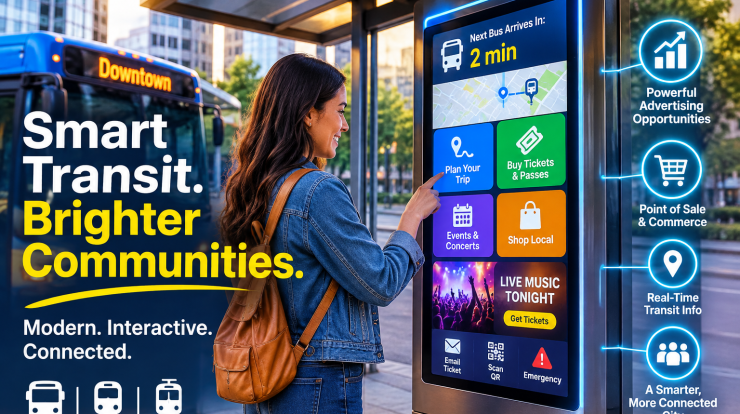
A new vision for transportation, digital advertising, and connected communities
Public transportation is an essential part of modern communities, connecting millions of people to their workplaces, schools, businesses, and destinations every day. But what if we could make the experience significantly more innovative by transforming traditional bus stops and train stations into interactive digital destinations? By combining modern technology, digital advertising, integrated e-commerce, and a point-of-sale at every bus station, we have an opportunity to rethink how people interact with public transportation while creating an entirely new advertising marketplace.
The concept is to introduce interactive touchscreen kiosks at bus stops and train stations, giving passengers access to a wide range of transportation services and commercial opportunities. Instead of simply waiting for the next bus, passengers could plan their journeys, view real-time bus locations and arrival times, purchase tickets, explore local events, and shop for products and services—all from one convenient touchscreen.
At the same time, these digital kiosks would create a new advertising opportunity for businesses of every size. Local companies could promote their products and services to consumers traveling through their communities, while national and international brands could distribute advertising campaigns across participating transportation networks. With integrated point-of-sale capabilities, passengers could purchase concert tickets, event admissions, products, and services directly from the touchscreen.
The vision is to build a connected transportation and advertising ecosystem that benefits passengers, businesses, and transit agencies. By digitizing bus stops and train stations, we can introduce new revenue opportunities, improve access to transportation information, possibly make public transportation free, and create an innovative platform that connects local communities with businesses and commercial opportunities around the world.
1. Rethinking How Public Transportation Is Funded
Public transportation has traditionally relied on passenger fares, government funding, and public subsidies to support daily operations. But as technology continues to change how businesses advertise and consumers make purchasing decisions, there is an opportunity to introduce an entirely new revenue model that could help transform the economics of public transportation.
Imagine turning thousands of bus stops and train stations into connected digital advertising and commerce destinations. Rather than relying exclusively on traditional advertising placements or passenger fares, transit agencies could generate additional revenue through interactive touchscreen kiosks that connect advertisers directly with consumers.
Each participating transportation location could become a point of engagement where passengers discover local businesses, purchase concert tickets, explore community events, shop for products, and access special offers. These interactions would create opportunities to generate revenue through advertising impressions, completed transactions, affiliate commissions, and revenue-sharing partnerships.
The platform would provide businesses with a new way to reach consumers while giving transportation agencies access to additional commercial revenue streams. Advertisers could purchase campaigns targeting individual stations, neighborhoods, entire cities, or larger geographic regions. Local businesses would have the opportunity to reach nearby consumers, while national and international brands could distribute campaigns across an expanding transportation network.
A portion of the revenue generated through these activities could be shared with participating transit agencies to help support operating expenses, technology investments, infrastructure improvements, passenger services, and possibly make public transportation free.
The opportunity extends beyond simply generating advertising revenue. It is about creating a more valuable transportation infrastructure by integrating digital commerce into locations that millions of people already visit every day.
By developing a scalable advertising and point-of-sale network, public transportation agencies could establish new commercial partnerships, diversify their revenue sources, and explore innovative ways to improve the services they provide to their communities.
Ultimately, this concept introduces a new perspective on transportation funding: What if the infrastructure people use to travel could also become a platform that generates revenue, supports local businesses, and creates measurable economic value?
2. Transforming Bus Stops Into Intelligent Digital Destinations
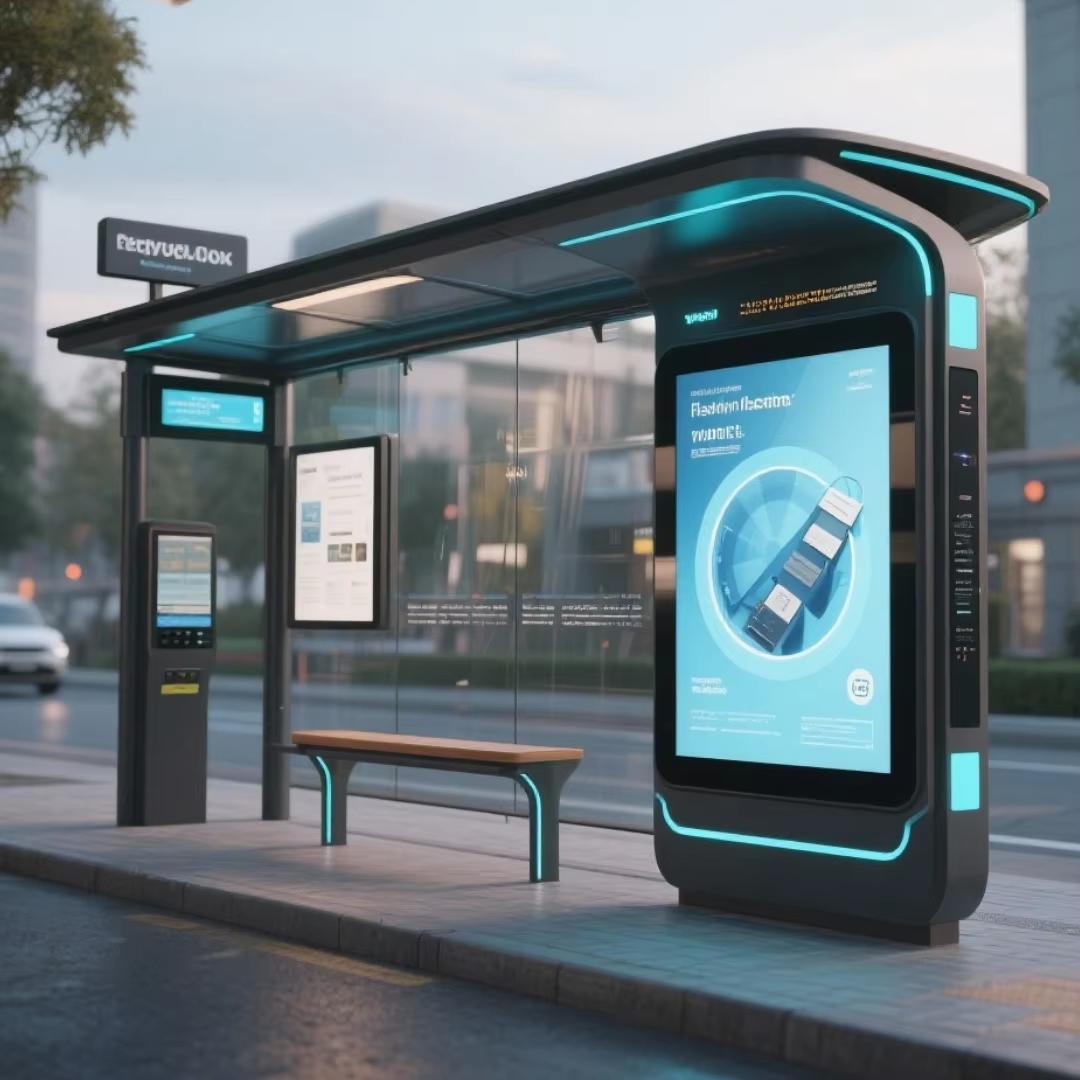
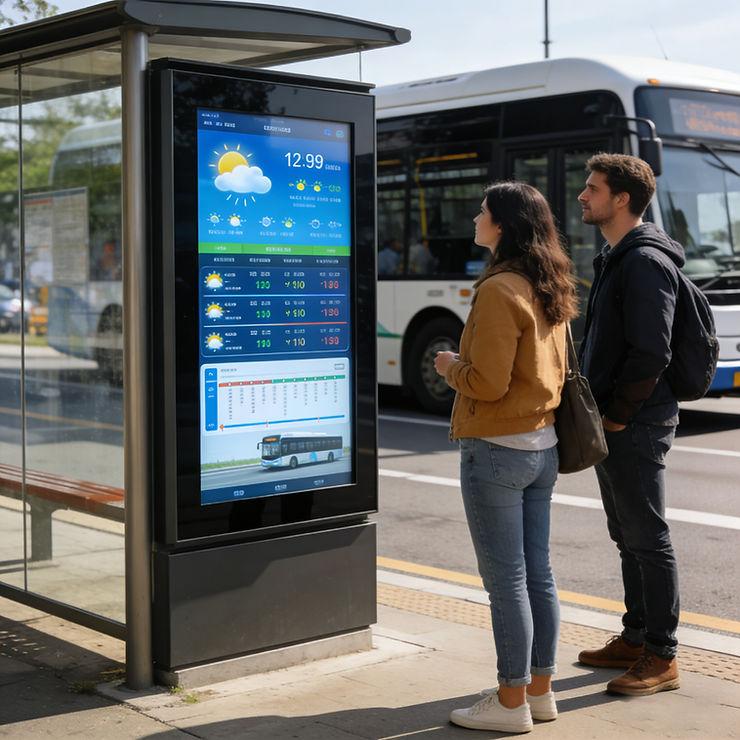
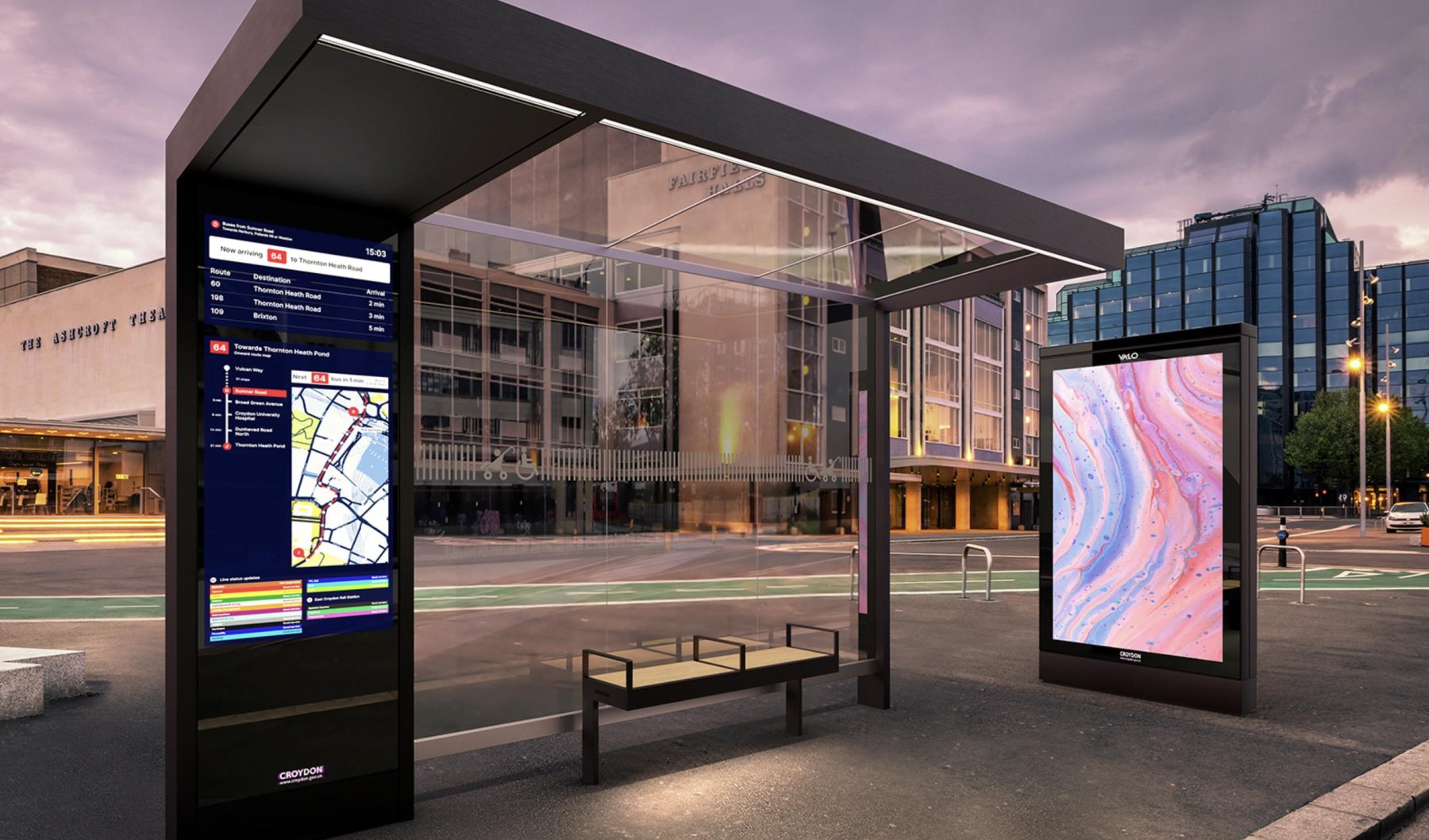
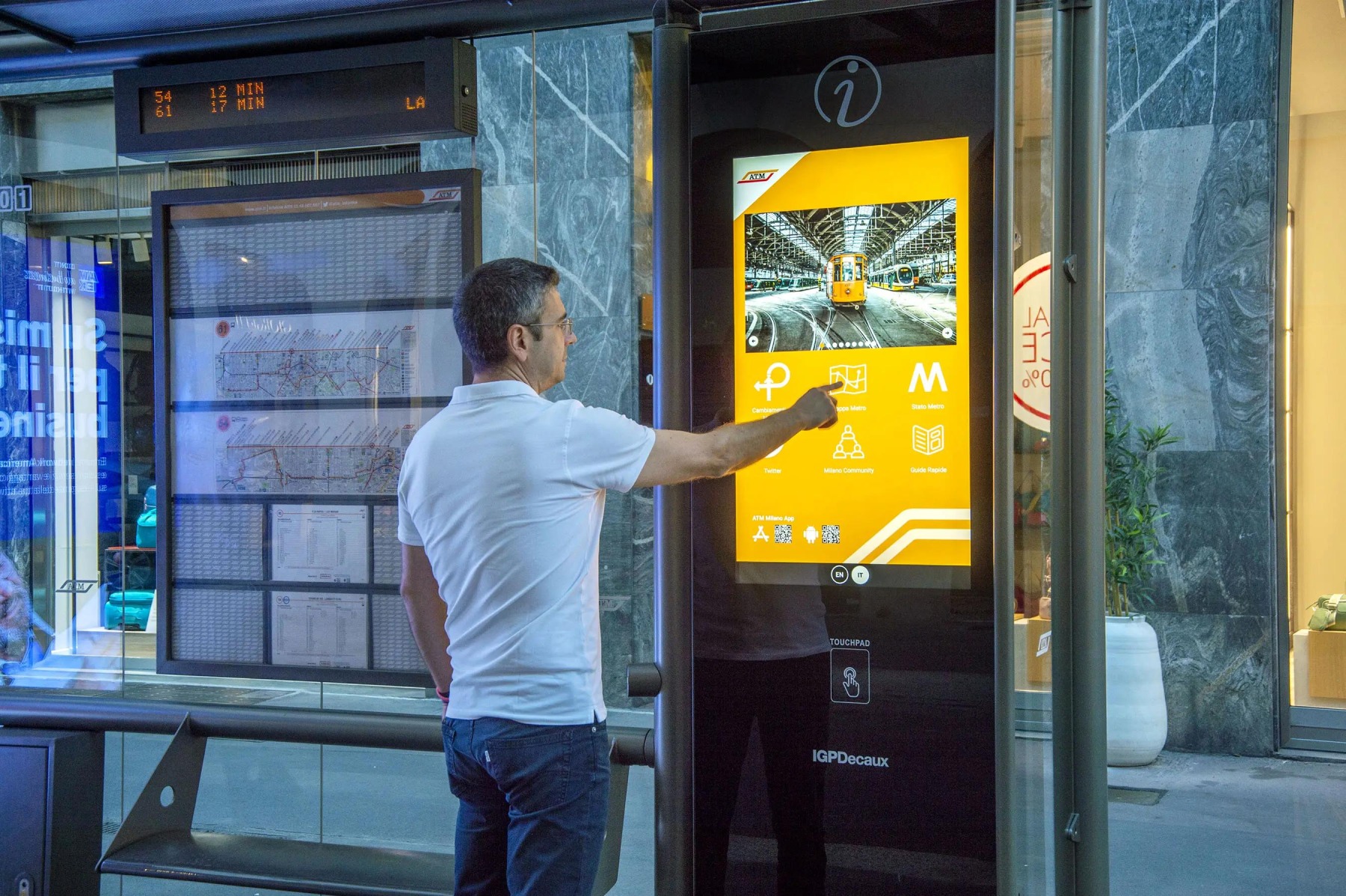
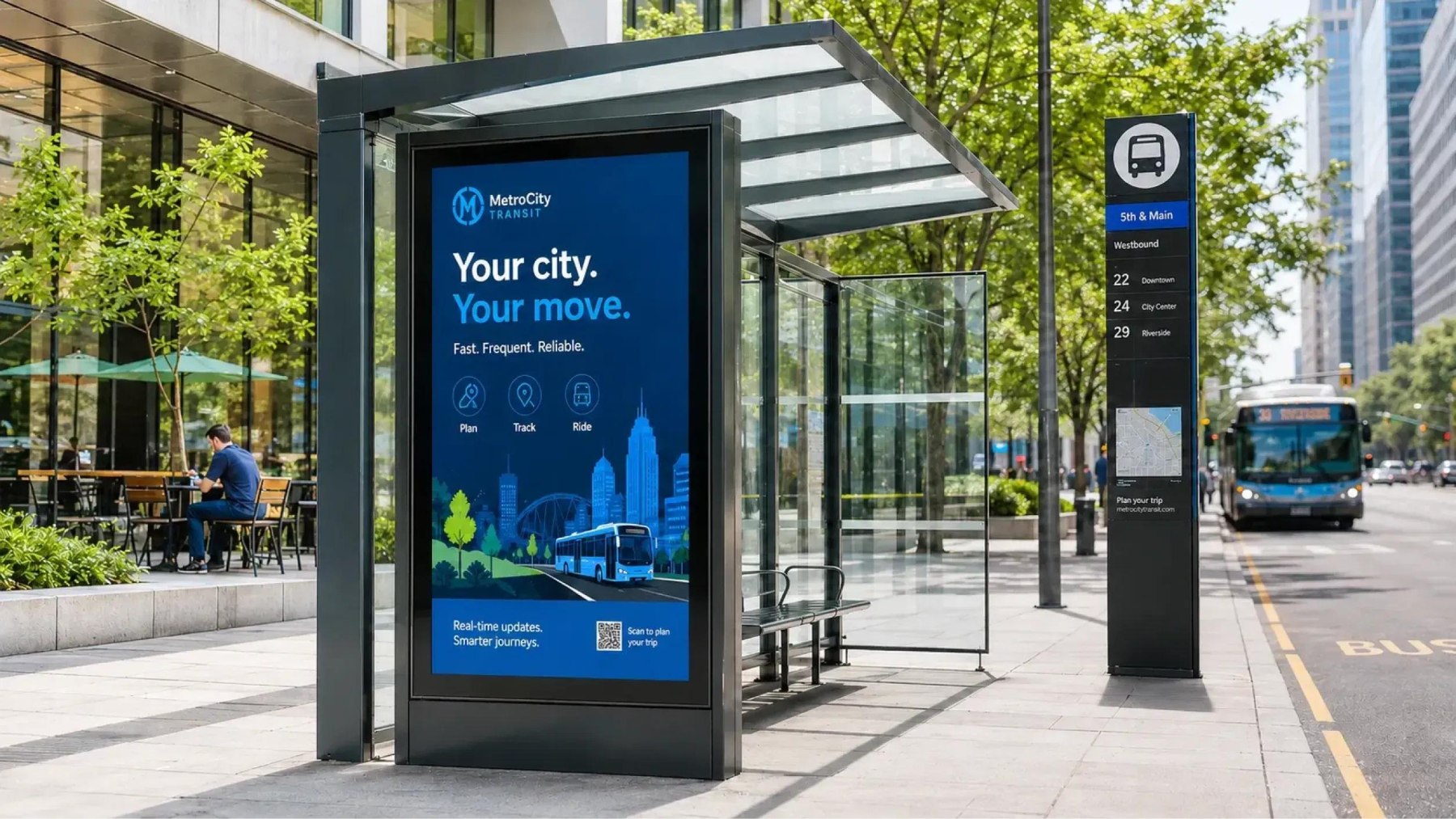
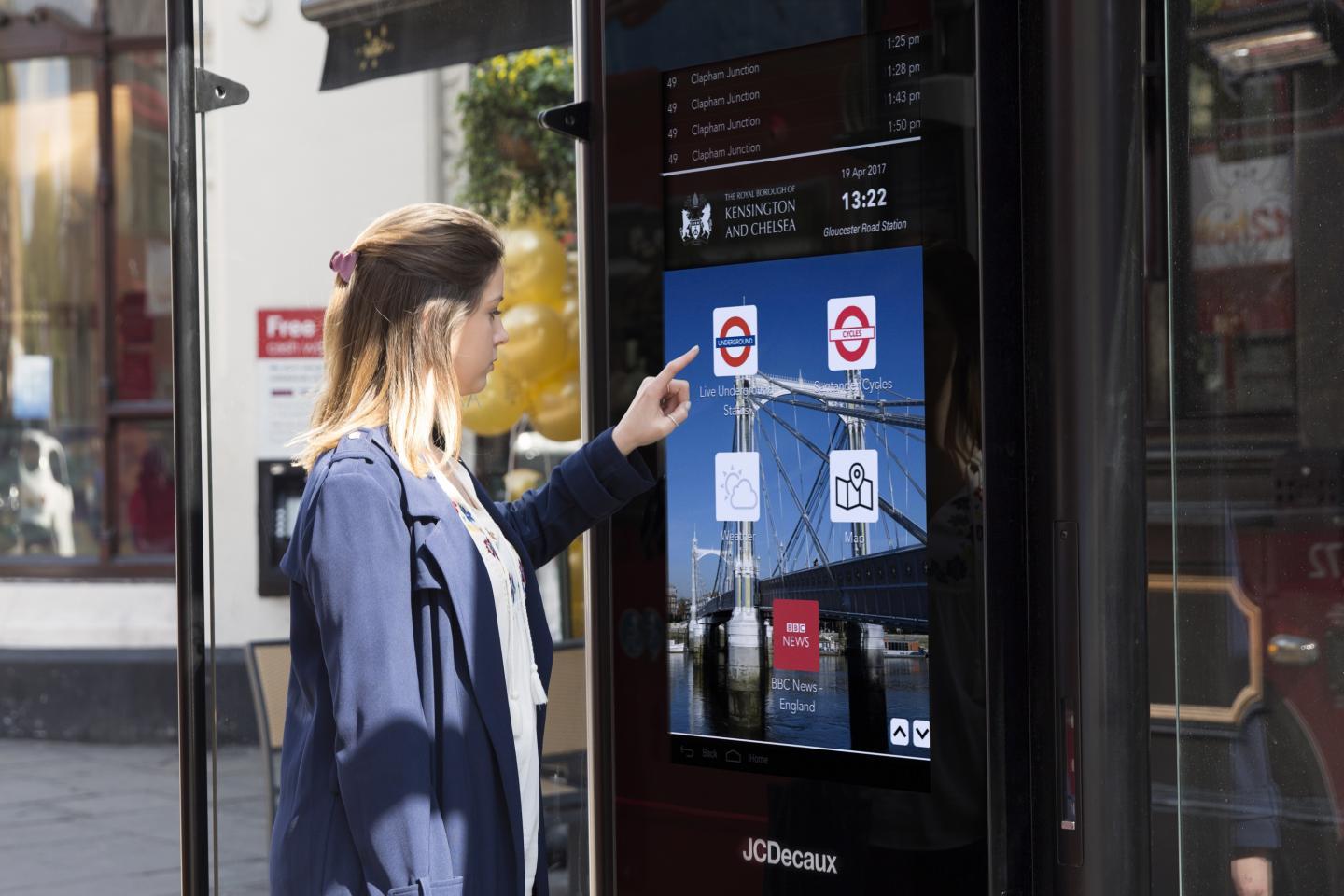
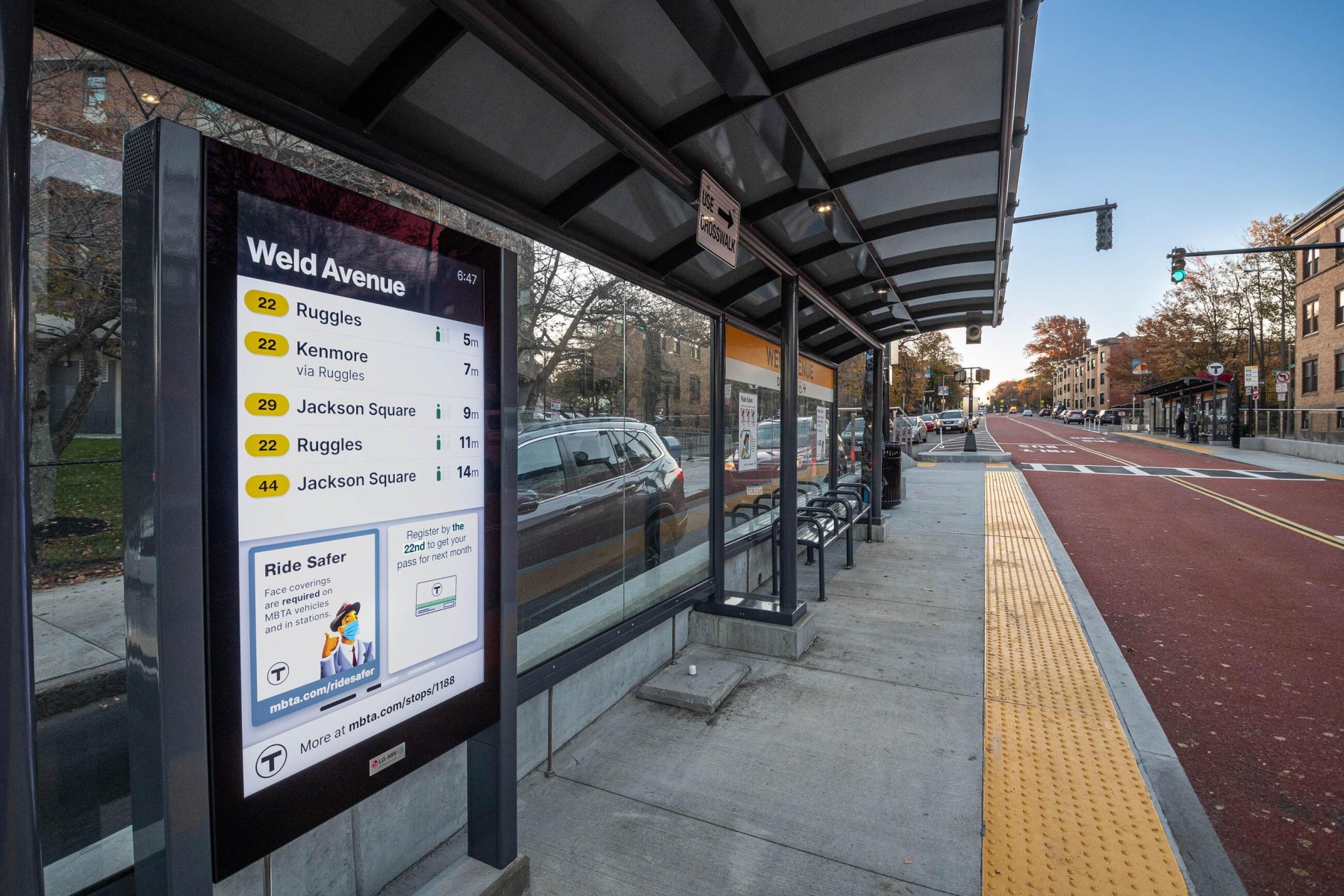
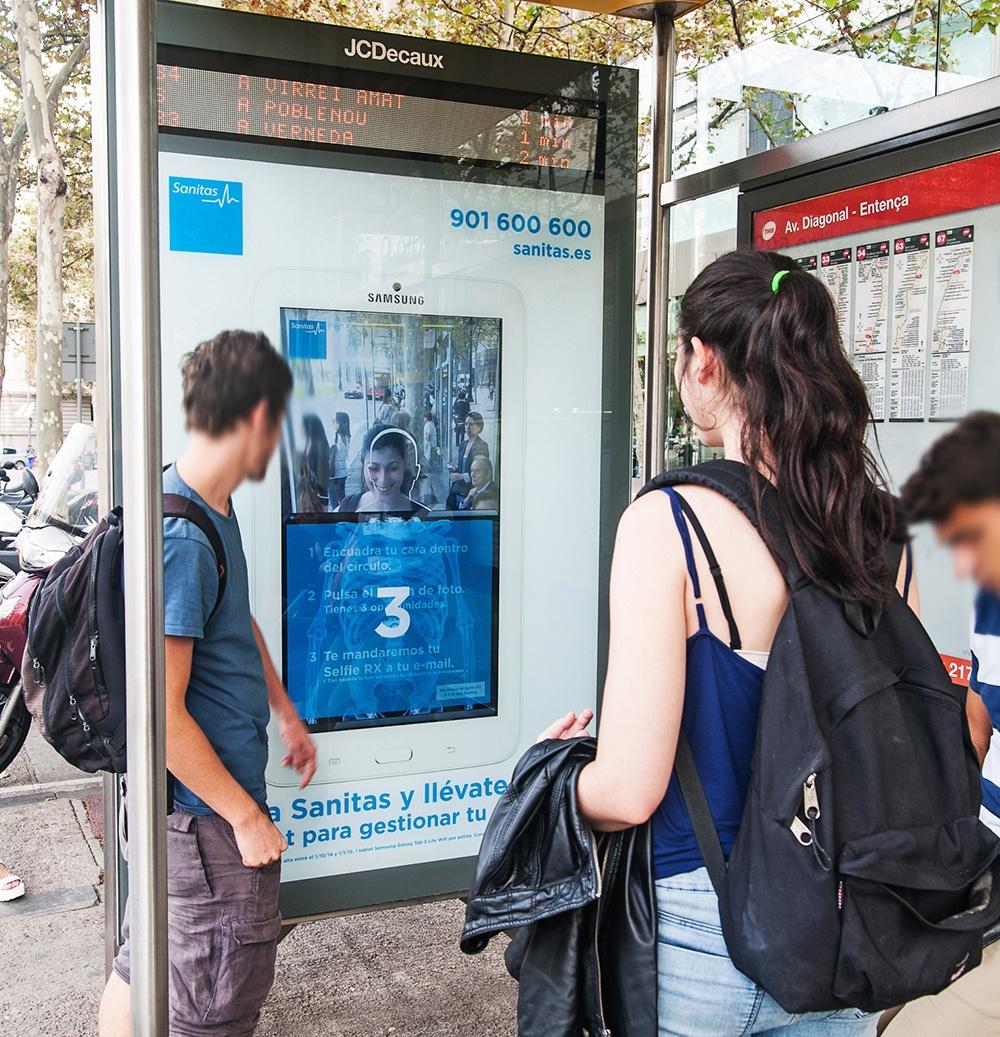
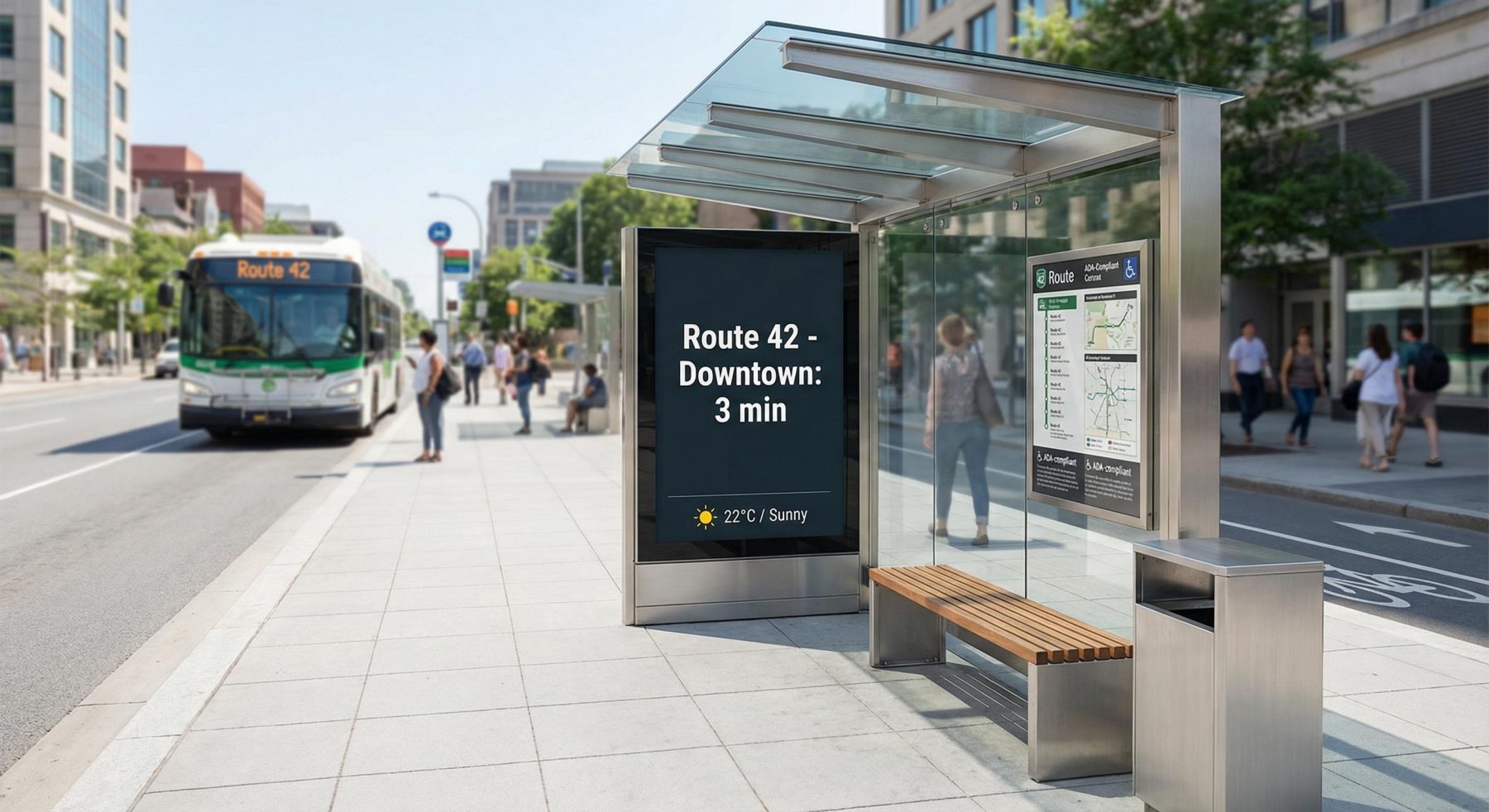
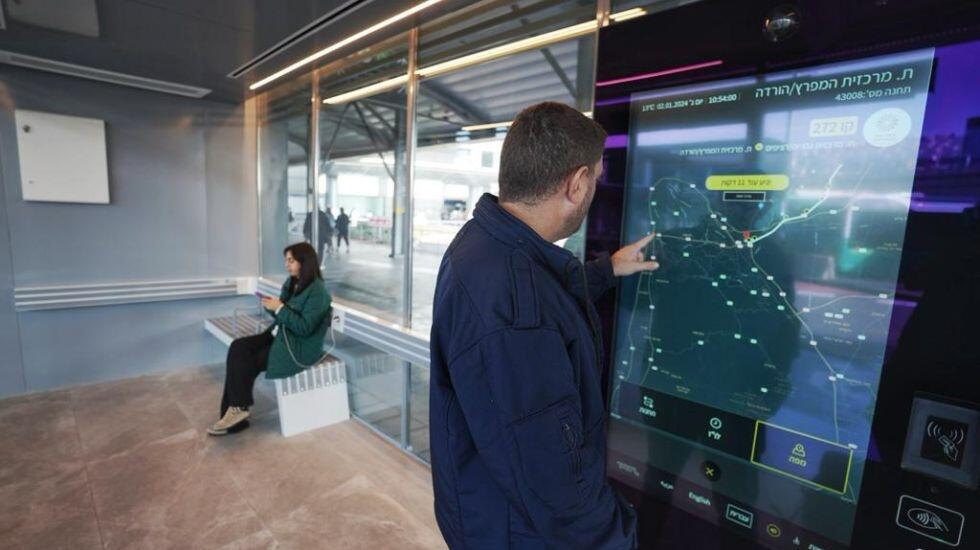
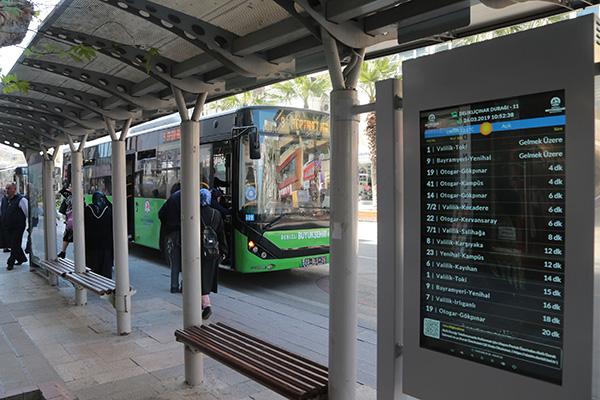
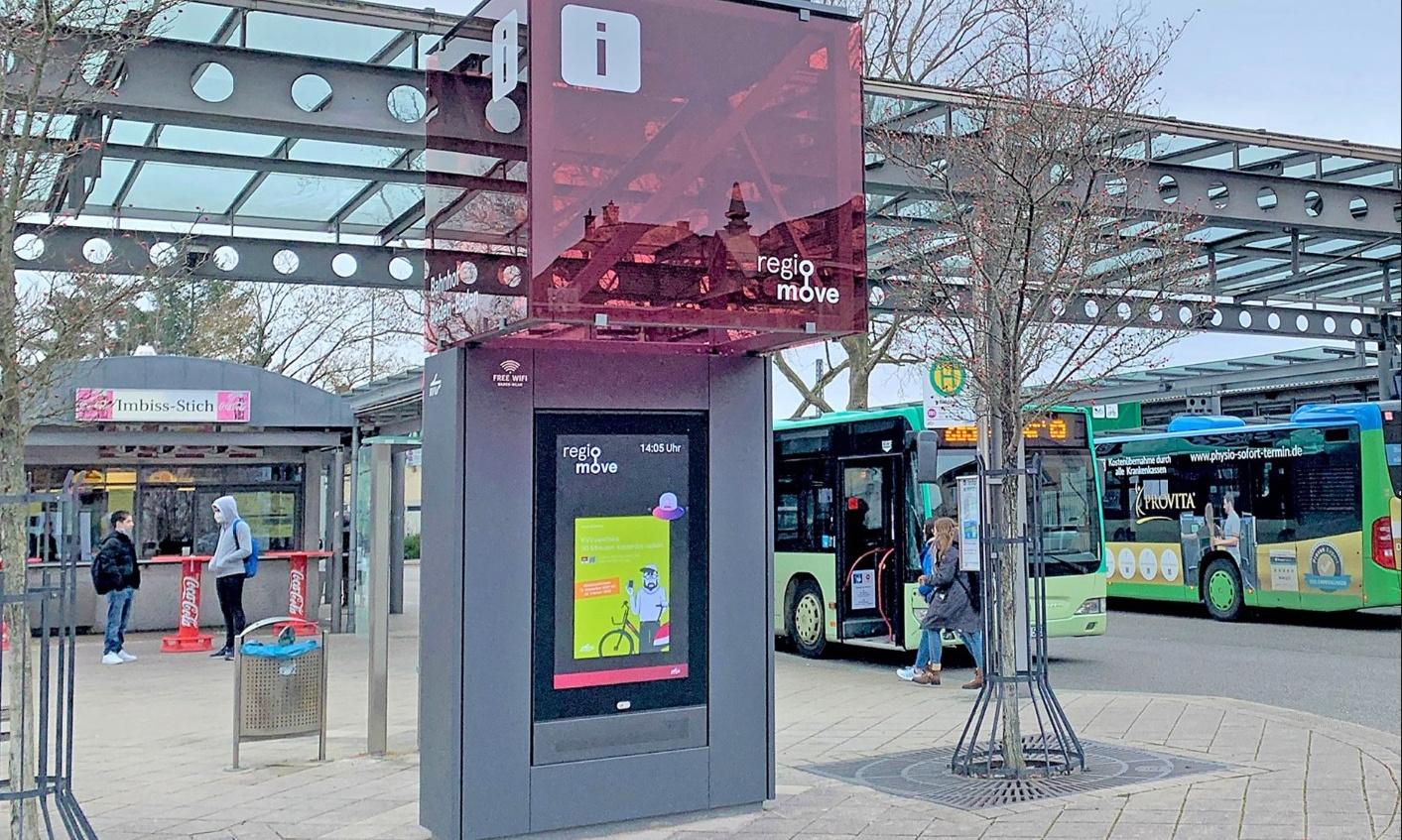
One of the most innovative aspects of this concept is the digitization of bus stops and train stations.
Today, many bus stops provide limited information. Riders may find a printed schedule, a route number, or a small sign identifying the location. Passengers often rely on their smartphones to determine when a bus will arrive or how to navigate unfamiliar routes.
A smart transportation kiosk would dramatically improve this experience.
Each participating bus station could feature a touchscreen interface connected to a centralized transportation and advertising platform. The kiosk would serve two primary purposes: helping passengers navigate public transportation and providing advertisers with an interactive point of sale.
Rather than simply displaying advertisements, the touchscreen would allow consumers to take action.
Passengers could discover:
- Local concerts and entertainment events.
- Sporting events and ticket sales.
- Restaurants, retail stores, and local businesses.
- Products and services available in their communities.
- Special promotions and discounts.
- Employment opportunities and community services.
For example, someone waiting for a bus in downtown Miami might discover a concert taking place that evening. They could view the event details, purchase tickets directly through the touchscreen, and receive a QR code on their phone.
A restaurant could advertise a lunch special to commuters traveling through a nearby station. A local theater could promote an upcoming performance. A national retailer could distribute advertising across hundreds or thousands of transportation locations.
The bus stop would become a digital marketplace that connects consumers with opportunities in the real world.
3. Creating a New Advertising Network for Local and Global Businesses
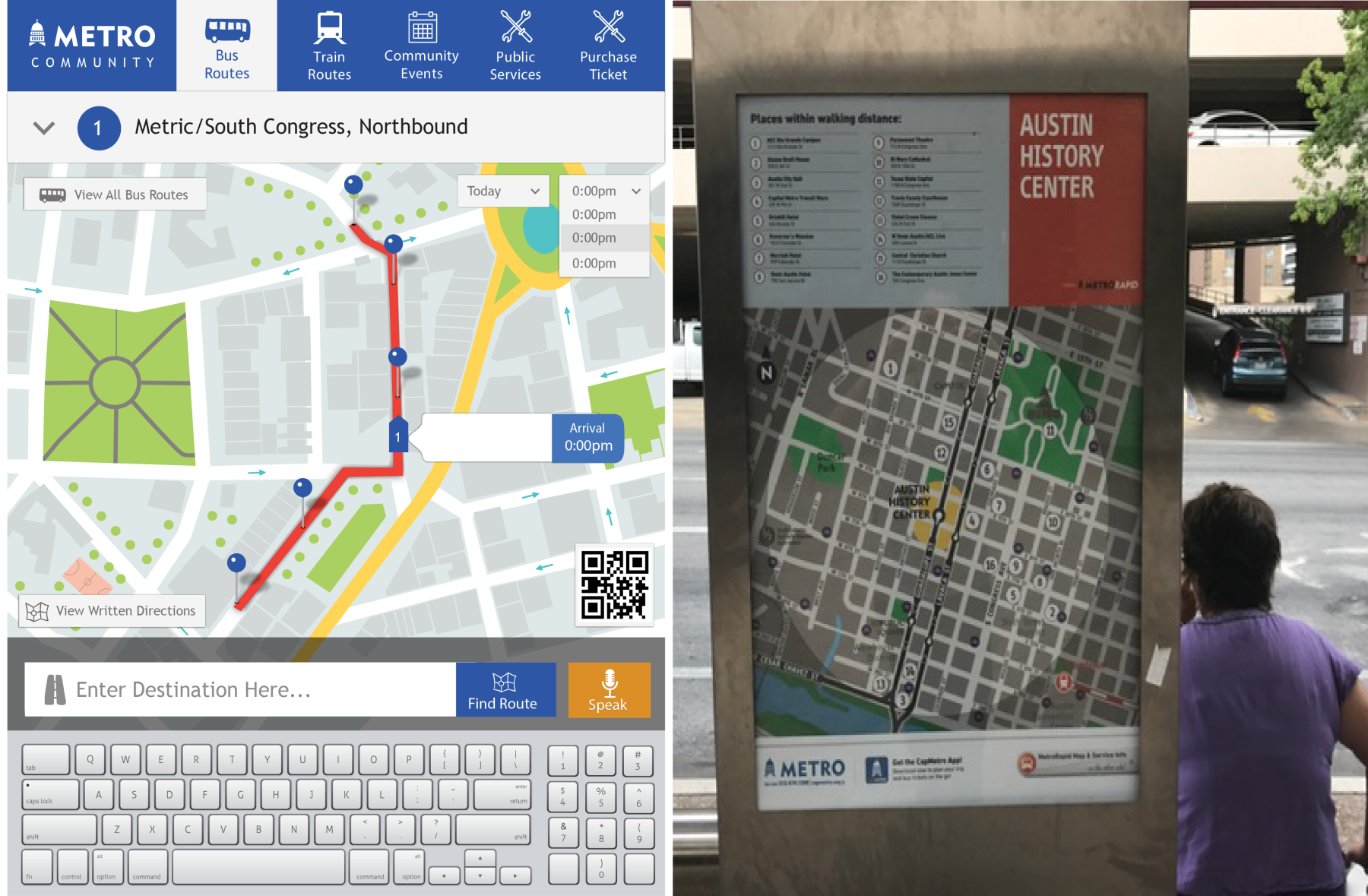
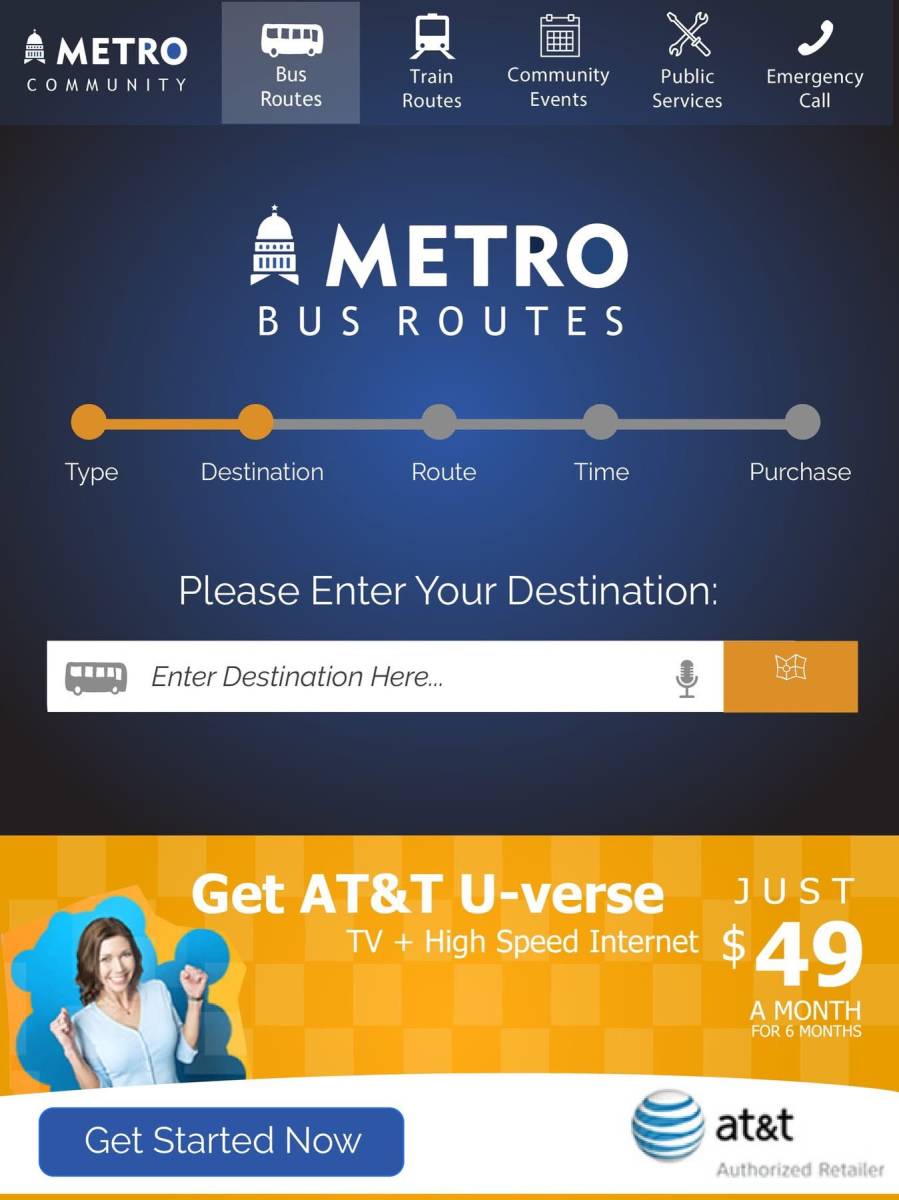
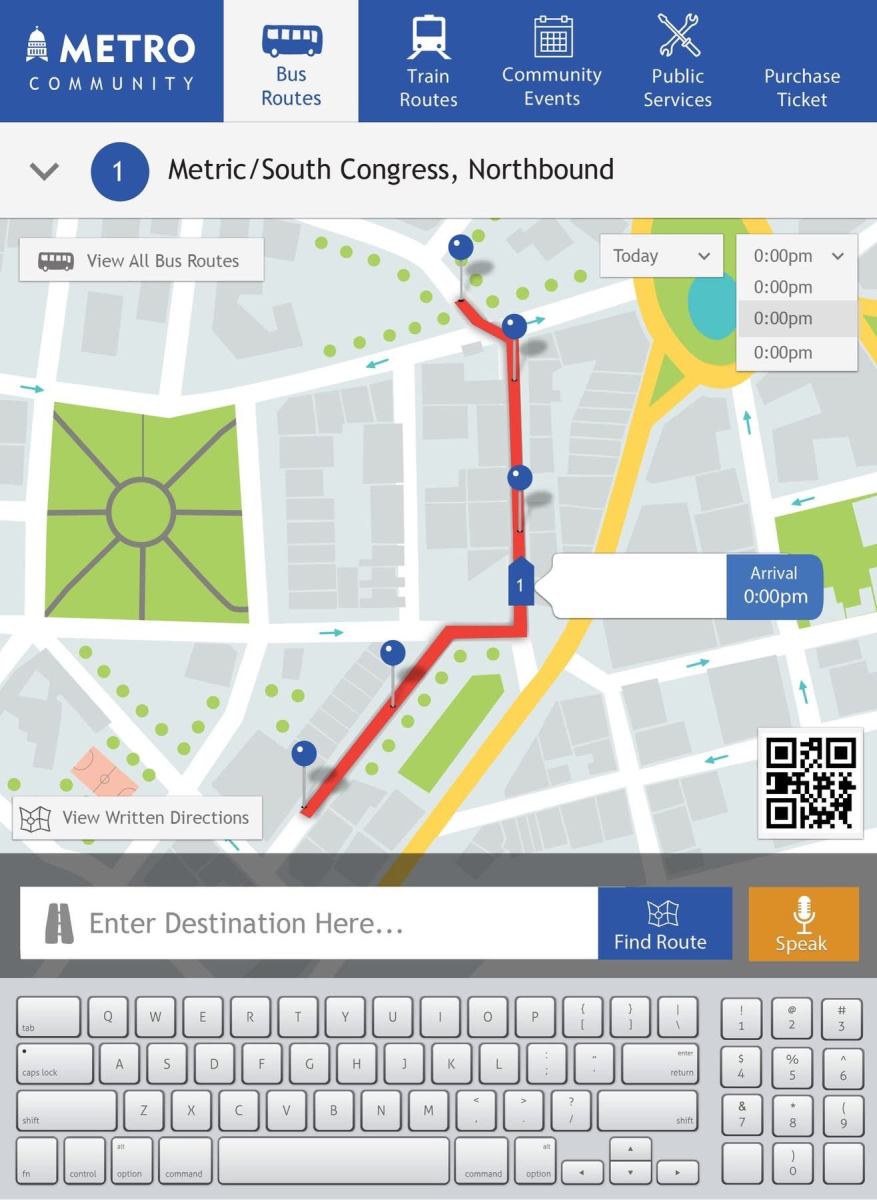
The advertising opportunity extends far beyond traditional transit advertisements.
Today, businesses spend significant amounts of money trying to reach consumers through search engines, social media, display advertising, and other digital channels. Although these platforms provide extensive reach, advertisers often face increasing competition, rising costs, and difficulty connecting advertising exposure to real-world purchases.
A transportation-based advertising network could offer a different approach.
By placing interactive advertising displays in locations where people are already traveling, the platform could create a new opportunity for advertisers to reach consumers based on location, time, and interest.
Local advertisers
Local businesses could purchase advertising campaigns targeted toward specific bus stations, neighborhoods, or geographic areas.
A small business could advertise at ten nearby bus stops rather than purchasing a campaign across an entire city.
Potential advertisers could include:
- Restaurants and coffee shops.
- Local concert venues.
- Retail stores and shopping centers.
- Museums and tourist attractions.
- Fitness studios and wellness businesses.
- Local service providers.
- Community organizations.
- Colleges and educational institutions.
This could make digital advertising more accessible to businesses that do not have the budget to compete with large national advertisers.
Global advertisers
National and international brands could use the platform to distribute campaigns across multiple cities, states, and countries.
A global advertiser could submit a single campaign through the primary website and select the transportation locations where its advertisements should appear.
For example, a company launching a new product could distribute its campaign across major metropolitan transportation networks while maintaining the ability to customize advertisements for individual markets.
The platform could support multiple advertising formats, including:
- Standard digital banner advertisements.
- Full-screen touchscreen advertisements.
- Interactive product advertisements.
- Video advertising.
- Location-specific promotions.
- QR-code-based campaigns.
- Sponsored recommendations and offers.
The goal would be to create a scalable advertising network that serves businesses of every size.
4. A Higher Return on Investment Through Interactive Point of Sale
One of the biggest opportunities for advertisers is the ability to connect advertising exposure directly to a transaction.
Traditional digital advertising often measures impressions, clicks, and conversions. However, many advertisements are viewed without generating an immediate purchase.
A touchscreen-based advertising platform could shorten the distance between discovering a product and buying it.
Imagine a passenger viewing an advertisement for a concert. Instead of seeing a banner and searching for the event later, the passenger could immediately purchase tickets.
The same approach could be applied to restaurants, local attractions, products, and services.
This creates the possibility of two advertising revenue models.
Revenue-sharing advertising
Under a revenue-sharing model, advertisers could promote products or services through the transportation network and share a portion of the revenue generated by completed transactions.
For example, a local event organizer could offer tickets through the platform. When a passenger purchases a ticket, the platform could receive an agreed-upon commission.
The revenue could be distributed among the platform, the transit agency, and potentially other participating partners.
This model would encourage the platform to promote advertisements that generate actual sales rather than simply maximizing impressions.
Paid impressions and conversions
A second option would allow advertisers to purchase campaigns based on impressions, clicks, or conversions.
Advertisers could establish campaign budgets, select locations, and define performance objectives.
A campaign might be designed to:
- Generate a specific number of impressions.
- Drive traffic to a website.
- Increase ticket sales.
- Promote a local business.
- Generate product purchases.
- Encourage consumers to redeem a discount.
Advertisers could review campaign analytics and evaluate performance through the control panel on the website.
The combination of impression-based advertising and transaction-based revenue would create flexibility for different types of businesses.
A major brand might prefer a large awareness campaign, while a local restaurant might prefer a campaign focused on generating purchases.
The central innovation is turning public transportation advertising into an interactive commercial experience with measurable outcomes.
5. An Easy-to-Use Website for Advertising Campaigns
A successful transportation advertising network would require a centralized website that makes purchasing and managing advertisements simple.
The primary website would serve as the advertising control center for the entire network.
Businesses would be able to create an account, select their target locations, upload advertising materials, choose a campaign budget, and submit advertisements for distribution.
The platform could provide a straightforward campaign management dashboard.
Advertiser dashboard features
- Create and manage advertising campaigns.
- Select bus stations, train stations, cities, or regions.
- Upload banner advertisements, videos, and promotional content.
- Choose impression-based or conversion-based pricing.
- Set campaign start and end dates.
- Establish advertising budgets.
- Review campaign performance.
- Track impressions, interactions, and purchases.
- Manage payment methods and invoices.
- Receive campaign reports.
The website should be designed for both local businesses and large advertising agencies.
A small business owner should be able to purchase a campaign without needing an advertising agency or technical expertise. At the same time, larger advertisers should have access to tools that support campaigns across multiple transportation networks.
An AI-powered advertising assistant could potentially help advertisers generate banner designs, promotional text, and campaign recommendations.
The result would be a simplified advertising experience that lowers the barrier to entry for businesses while expanding the number of potential advertisers participating in the network.
6. Intelligent Transportation Navigation at Every Bus Stop
While advertising creates the revenue opportunity, transportation navigation is the foundation of the passenger experience.
The touchscreen interface should be designed to make public transportation easy to understand, even for someone who has never used a particular transit system.
A passenger should be able to enter an address, business name, landmark, or destination and immediately receive detailed directions.
The system would calculate the most appropriate transportation route using available bus and train schedules.
Complete journey planning
The touchscreen could display:
- Estimated arrival times (Ex: Doordash)
- The nearest bus or train station.
- The next available departure.
- Exact bus and train route numbers.
- All required transfers.
- Walking directions between stops.
- Total journey duration.
- A complete map of the trip.
- Alternative routes.
For passengers who need to take multiple buses or trains, the interface would provide a complete itinerary rather than requiring them to search for each individual route.
For example, a passenger traveling from a residential neighborhood to a downtown employment center might need to take two buses and a train.
The touchscreen would show the complete journey, including where to board each vehicle, where to transfer, and when to expect the next departure.
The passenger could also receive these directions on their mobile device.
A QR code could transfer the itinerary directly to a phone. Additional options could include sending directions through text message or email.
This would eliminate much of the uncertainty associated with navigating public transportation.
Real-time bus tracking
Another important feature would be a live transportation map.
Passengers could see where their nearest bus is located and when it is expected to arrive.
The experience could resemble the live delivery tracking interfaces used by services such as DoorDash.
Instead of wondering whether a bus is running late, passengers could view its location on a map and receive updated arrival estimates.
The system could also display service disruptions, delays, and alternative transportation options when available.
Real-time tracking would help passengers make better decisions about when to leave, which bus stop to use, and whether an alternative route would be faster.
7. Digital Ticketing and Mobile Transportation Passes
An integrated ticketing system would make the transportation experience even more convenient.
Passengers could purchase tickets directly from the touchscreen using a credit card or another supported payment method.
The system could offer several options, depending on the transit agency’s fare structure.
These might include:
- Single-ride tickets.
- Multiple-ride tickets.
- Full-day transportation passes.
- Weekly or monthly passes.
- Transfers between buses and trains.
Once a ticket is purchased, the passenger could choose how to receive it.
Printed tickets
A touchscreen could include a printer that produces a physical ticket.
This would be especially useful for passengers who do not have smartphones, prefer printed tickets, or need a physical record of their purchase.
Mobile QR tickets
Passengers could also receive a QR code directly on the touchscreen.
By scanning the QR code with their phones, they could access a digital ticket that can be displayed to the bus driver or scanned by the vehicle’s ticket-validation equipment.
The platform could also send a confirmation email containing the ticket and QR code.
This approach would support both traditional and digital ticketing preferences.
However, ticket purchasing and validation would need to be integrated with each participating transit agency’s fare system. The technology should support the agency’s existing rules, including transfers, expiration times, and ticket validation requirements.
The broader goal is to create a simple, unified experience where passengers can plan, purchase, and manage transportation through a single interface.
8. Making Transportation Information Available to Everyone
Public transportation should be accessible to people of different ages, abilities, languages, and levels of technical experience.
The touchscreen interface should be designed with accessibility as a central requirement.
A successful system would include:
- Large, easy-to-read text.
- Clear navigation and simple instructions.
- Multilingual support.
- Screen-reader-compatible digital alternatives.
- Audio assistance for passengers with visual impairments.
- Accessible touchscreen placement.
- High-contrast display options.
- Easy access to emergency assistance.
The system should also accommodate passengers who do not own smartphones or have reliable internet access.
A printed itinerary or ticket could provide an alternative to mobile QR codes.
This is especially important because a transportation system designed to serve the entire community cannot depend exclusively on smartphone ownership.
The digital platform should make transportation more accessible, not create new barriers.
9. Emergency Assistance and Passenger Safety
Another valuable feature would be an emergency assistance option available directly from the touchscreen.
Passengers could use the kiosk to request assistance or contact the appropriate authorities when necessary.
Depending on the location and available infrastructure, the system could provide:
- Emergency contact functionality.
- Direct communication with transit security.
- Instructions for contacting emergency services.
- Station identification and location information.
- Assistance for passengers experiencing safety concerns.
The platform could also display important public announcements, including severe weather alerts, transportation disruptions, and emergency instructions.
Safety features would need to be designed in cooperation with transit agencies and local authorities.
The emergency interface should remain immediately accessible and should never be obscured by advertisements.
Privacy and security would also be critical. Emergency communications should be handled securely, with appropriate safeguards for passenger information.
These features could help make bus stops and train stations more useful, responsive, and reassuring environments for passengers.
10. Creating New Opportunities for Local Economies
One of the most important benefits of this concept is its potential to strengthen local economies.
Public transportation connects people with businesses. By combining transportation navigation with interactive advertising, the platform could create new opportunities for consumers to discover businesses they might otherwise overlook.
A passenger traveling through a neighborhood could discover a restaurant, a local festival, a small retail store, or a community event.
Businesses could advertise directly to people traveling within their geographic area.
For example, a local restaurant could promote a special offer to passengers arriving at a nearby station during lunchtime. A concert venue could promote ticket sales to people traveling through the surrounding neighborhood. A tourism organization could advertise attractions to visitors arriving at a major transportation hub.
This could create a valuable relationship between transportation infrastructure and local commerce.
The platform could also support community-based advertising initiatives. Cities and municipalities might use designated touchscreen space to promote public services, local events, educational opportunities, and community announcements.
By making advertising accessible to smaller businesses, the platform could help distribute economic opportunities beyond the largest corporations.
11. A New Revenue Opportunity for Transit Agencies
For transportation agencies, the concept offers an opportunity to generate revenue from existing infrastructure.
Bus stops and train stations already occupy valuable locations throughout cities. Digitizing these locations could create a new commercial asset.
The platform could establish partnerships with transit agencies to distribute advertising revenue according to negotiated agreements.
Potential revenue sources could include:
- Digital advertising impressions.
- Advertising campaign subscriptions.
- Revenue-sharing transactions.
- Concert and event ticket commissions.
- Product and service purchases.
- Sponsored transportation experiences.
- Advertising network partnerships.
A portion of this revenue could be directed toward transportation operating expenses, infrastructure improvements, maintenance, and potentially reducing or eliminating passenger fares.
However, the financial model would need to account for the costs of installing, maintaining, and operating the touchscreen network.
These costs could include hardware, software, internet connectivity, payment processing, electricity, insurance, maintenance, and customer support.
The platform would also need to demonstrate that advertising revenue can reliably support a meaningful portion of transportation expenses.
A realistic implementation would begin with pilot programs in selected cities, measure performance, and gradually expand as the financial model proves sustainable.
12. The Technology Behind the Vision
Building this platform would require a combination of transportation technology, digital advertising infrastructure, payment processing, and interactive software.
The primary website would function as the central advertising management platform. The touchscreen kiosks would connect to the platform through secure cloud-based infrastructure.
Transit data would be integrated through partnerships with transportation agencies and their technology providers.
The system could incorporate:
- Real-time vehicle location data.
- Bus and train schedules.
- Transit route information.
- Digital ticketing systems.
- Payment processing.
- Advertising campaign management.
- Analytics and reporting.
- QR-code generation.
- Mobile itinerary delivery.
- Emergency assistance systems.
An important consideration would be interoperability.
Different cities operate different transportation systems, ticketing technologies, and scheduling platforms. The network would need to support these differences while maintaining a consistent passenger experience.
Open transportation data standards, where available, could help simplify the integration process.
The platform would also need to protect passenger privacy. Advertising targeting should not require the collection of unnecessary personal information. Location-based advertising should use appropriate safeguards, and payment information should be handled through secure, compliant payment systems.
The objective is to build a scalable technology platform that can support transportation networks across multiple cities and countries.
13. Building a Global Network of Intelligent Transportation Advertising
Imagine a network of thousands of bus stops and train stations connected through a centralized advertising platform.
A local advertiser could purchase a campaign in one neighborhood. A national brand could advertise across multiple metropolitan areas. An international company could distribute advertisements across transportation networks in different countries.
The network could provide advertisers with a consistent method for purchasing campaigns while allowing each transportation agency to maintain control over its local operations.
The platform could also support different languages, currencies, payment methods, advertising regulations, and transportation systems.
As the network expands, the number of participating advertisers and available advertising locations could increase.
This creates the possibility of a marketplace where businesses compete for advertising opportunities while transit agencies benefit from additional revenue.
The platform’s long-term value would depend on its ability to attract passengers, advertisers, and transportation partners simultaneously.
More participating transportation locations would create more advertising opportunities. More advertisers would generate greater potential revenue. Greater revenue could help support the goal of reducing transportation costs for passengers.
14. A Better Transportation Experience for Everyone
The vision behind this concept is not simply to place advertisements on bus stops.
It is to create a new relationship between transportation, commerce, and technology.
For passengers, the benefits could include free transportation, easier navigation, real-time bus tracking, convenient digital ticketing, and access to local opportunities.
For advertisers, the platform could provide new ways to reach consumers, promote products and services, and measure campaign performance.
For transit agencies, the system could create an additional source of revenue while improving the passenger experience.
For local businesses, it could provide an affordable way to reach consumers traveling through their communities.
For cities, it could offer a new approach to making public transportation more accessible and financially sustainable.
The success of this model would depend on balancing these interests. Advertising must remain useful and unobtrusive. Passenger privacy must be protected. Transportation services must remain reliable. Revenue must be sufficient to support the infrastructure and contribute meaningfully toward operating costs.
These are significant challenges, but they also represent an opportunity for innovation.
Conclusion: Reimagining the Future of Public Transportation
Public transportation has the potential to become one of the most valuable digital infrastructure networks in the world.
By transforming bus stops and train stations into interactive destinations, cities could create new opportunities for advertisers while improving the daily lives of millions of passengers.
The combination of digital advertising, interactive point-of-sale technology, real-time transportation information, and integrated ticketing could fundamentally change how people experience public transportation.
The ultimate mission is straightforward: make public transportation free by creating a more intelligent, more valuable, and more sustainable transportation ecosystem.
This concept represents an opportunity to rethink how public transportation is funded, how businesses reach consumers, and how technology can connect communities.
With the right partnerships, infrastructure, and financial model, the humble bus stop could become something much more: a gateway to transportation, commerce, community, and opportunity.
The future of public transportation may not be funded exclusively by the people who ride it. It may be supported by a network of businesses that benefit from connecting with those passengers.
And that could create a transportation system where everyone has something to gain.

With 23+ years in the Web Hosting Industry, Brian has had the opportunity to design websites for some of the largest companies in the industry. Brian currently holds the position as Founder, CEO, and Executive Creative Director for WebHosting.School.